
If your house sits on a concrete slab, some of its water lines run in or under the concrete. A leak there does not drip into view. It soaks the ground, warms the floor if it is a hot water line and raises the bill. Finding it takes a method, and the method is what keeps the repair small.
This guide explains the signs, the detection process and what happens next. It is about finding the leak. The repair side is covered on our slab leak repair page, and active leaks can be reported to the 24/7 line.
The signs that point to a slab leak
- The water meter moves when everything is off.
- A warm or hot spot on the floor.
- The sound of running water with all fixtures closed.
- A sudden rise in the water bill.
- Damp or discolored flooring, or a musty smell.
- Cracks that appear in floors or walls after a wet period.
Other leaks cause some of these. The only way to know is a test, and the tests are not guesswork.
How the search works
From the meter to the exact spot
Each step rules out something and narrows the area.
- 1
Meter test. A moving meter with the house off confirms a leak on the property.
- 2
Isolate. The main valve is closed to see if the meter stops, which separates the house from the service line.
- 3
Pressure test. Hot and cold systems are tested separately, so we know which one is losing pressure.
- 4
Acoustic listening. Sensitive microphones on the floor pick up the sound of water escaping from a pipe.
- 5
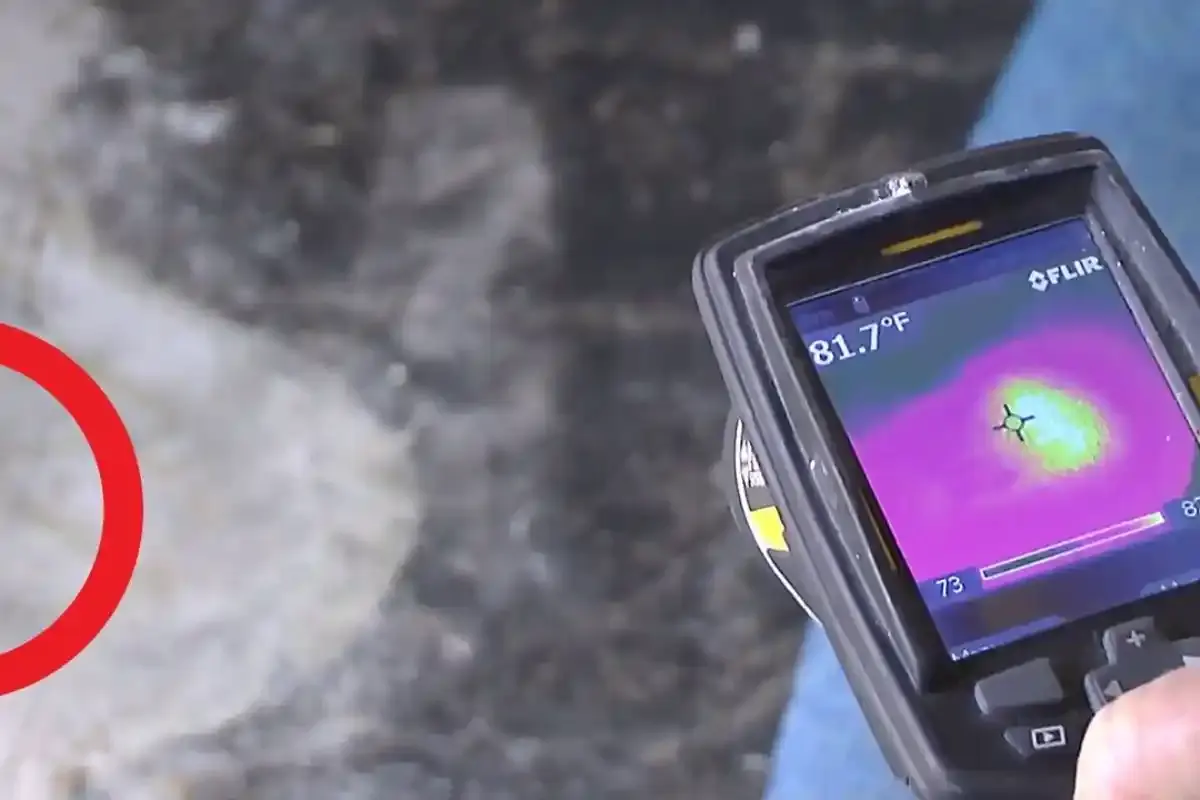
Thermal imaging. A hot water line shows as a warm band, which helps trace the route.
- 6
Mark and confirm. The spot is marked and checked from more than one angle before anyone cuts.
What each tool does well
Tools for finding a slab leak
| Tool | Best at | Limit. |
|---|---|---|
| Pressure gauge | Telling hot from cold from the service line | Does not show where the leak is. |
| Acoustic listening | Pinpointing the sound of a pressurized leak | Background noise can interfere. |
| Thermal camera | Showing hot water leaks | Cold lines show little contrast. |
| Moisture meter | Confirming damp materials | Surface reading only. |
| Line tracing | Finding the pipe route | Does not find the leak. |
No single tool is enough on its own. Plumbers combine them, and they trust the result when more than one agrees. The leak detection page explains the same approach for other parts of the house.
What happens after the leak is found
With the spot confirmed, you have options. A spot repair opens a small section of the slab, fixes the pipe and patches the concrete. If the pipe is failing in several places, rerouting new lines through the attic or walls is an alternative. If the whole system is old, a repipe may be the better value, see repiping.
You will want the leak report for your insurance claim. It documents where the leak was, what it damaged and how it was confirmed.
What to do while you wait
- Close the main valve if water is spreading or the floor is wet.
- Turn off power to the wet area.
- Move rugs and furniture from damp floors.
- Take photos and note when you first saw the signs.
- Keep water bills for your insurer.
Slab leak or something else
Several problems mimic a slab leak. A leaking irrigation line, a dripping outdoor spigot or a toilet that runs silently can all move the meter. Ruling them out first saves a detection visit and often the whole slab concern.
- Shut off the irrigation system and check the meter again.
- Dye test each toilet tank for a silent leak.
- Check hose bibs and the water heater relief line.
- Look for damp spots in the yard between the meter and the house.
If the meter still moves after those checks, the leak is likely in a line you cannot see, and a detection visit makes sense.
Documenting the problem for a claim
Photograph damp flooring, note the meter readings and keep bills from before and after the change. A written detection report that names the location and the method is the document an insurer will ask to see, so ask for one at the end of the visit.
Douglasville: clay, concrete and the county's rules
Douglas County sits on Georgia's Piedmont, where clay soil swells and shrinks with the weather. That movement presses on concrete and the pipes in it, and it can crack joints or wear a pipe against an edge. It does not cause every slab leak, but it is a reason to check pressure and the pipe's condition at the same visit.
Douglas County's residential plumbing permit application lists underground water service lines and other items priced by the foot. Ask the county building department whether your repair needs a permit. Homes in Lithia Springs and the towns on our service areas page are covered by their own offices.
Georgia's state minimum plumbing code is the International Plumbing Code (IPC) with Georgia amendments, enforced locally. Replacement piping is expected to meet it, and a permit may apply to the repair.
Warm floor or a bill that jumped? Call for a plumber and a clear price.
Frequently asked questions
We combine a meter test, pressure testing, acoustic listening and thermal imaging to pinpoint the spot before any concrete is cut.
No. The goal of detection is to limit the opening to the spot where the leak is.
A warm floor spot, the sound of running water, a rising bill, a moving meter and damp flooring are the main signs.
The meter test is a good start, but locating the spot takes acoustic and thermal tools.
Some policies cover the cost of finding a leak that caused covered damage. Check your policy.
The line is open 24/7 for active leaks. Scheduled detection is by appointment.
Yes. Slab leak detection is dispatched to Lithia Springs as well. See the service areas page for other towns.