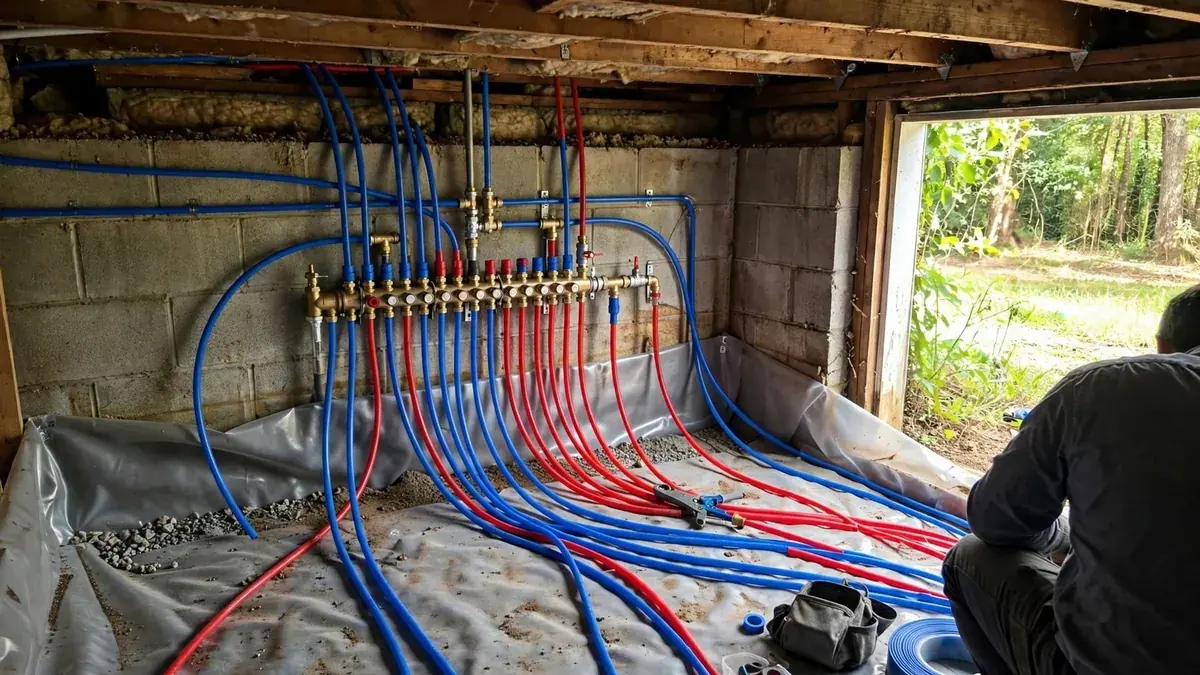
Repiping means replacing the supply lines in a house, not the drains. It makes sense when a home has old galvanized steel, polybutylene or thin copper with pinholes, and repairs keep adding up. A plumber can usually tell from the pipe, the water, the pressure and the leak history whether a repipe is justified.
Reasons to consider replacing the supply lines
- Brown or rust-colored water when you first turn on a tap.
- Low pressure at every fixture, not just one.
- Pinhole leaks, even if each one has been repaired.
- Gray plastic polybutylene pipe, common in homes built from the late 1970s into the mid 1990s.
- Galvanized pipe in a home built before the 1960s.
- A pattern of failed fittings and valves.
A single leak does not call for a repipe. A pattern does, and a plumber's report on the pipe's condition lets you decide with facts.
PEX, copper and CPVC compared
Most whole-house jobs today use PEX because it is fast and flexible. The right choice depends on the house and your preference.
| Material | Strengths | Trade-offs. |
|---|---|---|
| PEX | Flexible, fewer fittings, quicker install, resists freeze damage better than rigid pipe | Not for outdoor sun exposure, needs care at connections. |
| Copper | Long track record, rigid, handles heat | Higher material cost, more fittings and labor. |
| CPVC | Lower cost, rigid plastic | Can turn brittle with age and heat. |
How a repipe is done
From survey to final inspection
A whole-house job is planned so water is off for as short a time as possible.
- 1
Survey and plan. We walk the house, find the main path for new lines and mark the fixtures.
- 2
Protect the home. Floors and furnishings are covered and access points are chosen to keep patching small.
- 3
Run new lines. New supply pipe is run through attics, crawlspaces and walls from the main to each fixture.
- 4
Connect and test. Fixtures are reconnected and the system is pressure tested before closing up.
- 5
Patch and inspect. Access holes are patched, and any permit inspection is scheduled.
Most houses are repiped over one to a few working days, depending on size and access. Water is off for part of the time, so a plan for showers and cooking matters.
What about repairs only?
If one section failed, and the rest of the pipe is healthy, a repair is the right move. Our burst pipe repair page covers that, and leak detection helps find a slow leak before a bigger decision.
Where the pipes sit under a slab, rerouting through the attic is an alternative to breaking concrete. The slab leak repair page explains when that is the best choice.
What affects the cost of a repipe
You get a clear price before work starts. The factors are here.
Your water and your pipes
The Douglasville-Douglas County Water and Sewer Authority treats surface water from the Dog River Reservoir at its Bear Creek plant, and publishes a yearly water quality report. If you have copper pipe with pinholes, ask the authority about its water chemistry and ask a plumber about the pipe's condition. If you have galvanized pipe, rust-colored water is usually the pipe itself.
Materials and code in a repipe
Georgia's state minimum plumbing code is the International Plumbing Code (IPC) with Georgia amendments, enforced locally. It lists the pipe materials approved for water distribution, so ask which one your plumber proposes and why.
Wondering whether to repipe? Call for a pipe assessment and a clear price.
Frequently asked questions
Rusty water, low pressure at every fixture, repeated pinhole leaks and old galvanized or polybutylene pipe are the main signs. A plumber's assessment confirms it.
Most homes take one to a few working days depending on size, access and the material.
PEX has a strong track record, installs faster, and is flexible. Copper has a longer history and handles heat well. Both are sound choices when installed correctly.
Water is shut off for parts of the work. Your plumber schedules the sequence so you have water at night in many cases.
Access holes are needed in many homes. Patching is part of the plan, and painting is usually separate.
Yes. The line is open 24/7 for burst pipes and leaks. A repipe is planned work, but a failure can start the conversation.