
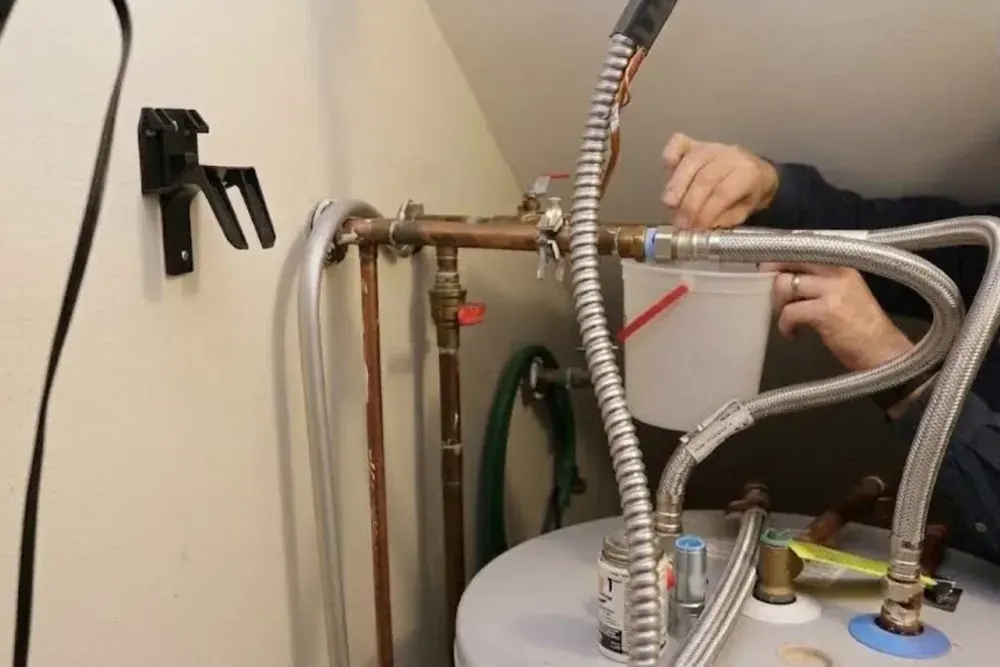
A water heater that is leaking, popping hard or sending out only cold water is an urgent problem, and our line is open 24/7 for it. While you wait for a plumber, close the cold supply valve on top of the tank, switch the power off at the breaker or turn the gas control to its pilot setting, and set a bucket under any drip.
If you smell gas, leave the house and call the gas utility or 911 before you call a plumber. Everything else on this page assumes the smell is not there.
Water heater repair in Douglasville, GA covers the parts that wear out first: thermostats, heating elements, gas control valves, thermocouples, anode rods, drain valves and the temperature and pressure relief valve. A repair makes sense when the tank itself is sound and the failed part costs far less than a new unit.
When a failing water heater is an emergency
Some symptoms mean the water has to be shut off now and the plumber called right away.
- Water pooling around the base of the tank or spreading across a garage or utility closet floor.
- Steam or hot water spitting from the relief valve discharge pipe.
- A scorched, metallic or rotten-egg smell near the heater.
- A heater in an attic or on an upper floor with any sign of a ceiling stain below it.
- No hot water at all in a house with young children, elderly residents or someone with a medical need for it.
A slow drip from a fitting at the top is less urgent, but it still wets insulation and rusts the tank, so it should not wait weeks.
Water heater leaks: where the water is coming from
Leaks are the most common reason people call us about a heater. The source decides everything. Water at the top usually comes from the inlet and outlet connections or the relief valve, and those are repairable in a single visit.
Water at the bottom may be a loose drain valve, which is a small fix, or a tank that has corroded through, which is not. A weeping seam or a puddle that returns after you dry it means the steel liner has failed. No sealant holds on a pressurized tank, so the honest answer is water heater replacement.
A technician confirms the source by drying the tank, checking each fitting with a paper towel, and testing the relief valve and thermal expansion pressure. That takes minutes and saves you from paying to repair a tank that is already finished.
Repair or replace: a quick decision guide
The table shows how the usual symptoms sort out. It is a starting point, and the tank's age and condition make the final call.
| What you see | Usual cause | Repair or replace. |
|---|---|---|
| No hot water, electric heater | Tripped high-limit reset, failed element or thermostat | Repair. |
| Pilot will not stay lit, gas heater | Worn thermocouple or dirty pilot assembly | Repair. |
| Water at the top fittings | Loose or corroded connection, or relief valve | Repair. |
| Rust-colored hot water only | Anode rod gone, tank interior corroding | Repair if early, replace if the tank is over 10 years. |
| Puddle returns after drying the base | Tank liner has failed | Replace. |
| Rumbling and banging noises | Sediment baked onto the bottom of the tank | Flush and test, replace if old. |
No hot water, lukewarm water and showers that run out fast
On an electric heater, the upper or lower element, a thermostat or the high-limit switch is usually the culprit. A plumber tests each with a meter instead of swapping parts and hoping. If only the lower element burns out, you get a short supply of hot water that runs lukewarm quickly.
On a gas heater, a pilot that goes out points to the thermocouple, a dirty pilot tube or a draft problem. A broken dip tube inside the tank sends cold water straight to the outlet and mixes it into your shower. All of these are routine repairs when the tank is sound.
Gas, electric and hybrid heaters: what changes in a repair
Gas units add the burner, gas valve, venting and combustion air to the checklist, and any gas work is done with safety first. Electric units are simpler to diagnose but need the power off before anyone opens a panel.
Hybrid heat pump heaters have a compressor, a fan, an air filter and a condensate drain on top of the normal tank parts. They need open space around them and a clear drain, so a repair there often starts with the filter and the drain line before any parts are ordered.
What changes the cost of a water heater repair
Every repair price depends on the part and the job around it. These are the factors a plumber weighs before giving you a clear price.
Insurance usually responds to sudden water damage from a failed heater but not to wear on the heater itself, so read your policy and take photos before anything is cleaned up. For a real number on your heater, call (770) 214-4545.
Water heaters in Douglasville homes: what the local water and permits mean for you
Douglas County's drinking water is surface water drawn from the Dog River Reservoir. It is treated at the Bear Creek Water Treatment Plant, according to the Douglasville-Douglas County Water and Sewer Authority's 2026 water quality report. That report does not list a hardness figure, so test your own tap with a simple strip kit.
The practical payoff is sediment. Whatever hardness your water has settles on the bottom of the tank over time, so a yearly drain-and-flush slows the rumbling and element failures that sediment causes.
Douglas County's residential plumbing permit application lists water heaters among its fee items. Permit rules vary by job, so ask the county building department whether your repair or swap needs one.
Code points behind a water heater repair
Georgia's state minimum plumbing code is the International Plumbing Code (IPC) with Georgia amendments, enforced locally. For a water heater, the IPC addresses items such as the temperature and pressure relief valve and its discharge pipe, which is why a plumber checks them during a repair.
Water heater down tonight? A licensed plumber can be dispatched now.
Frequently asked questions
Yes. The line is open 24/7 and a licensed plumber can be dispatched to Douglasville addresses at night, on weekends and on holidays. Shut off the cold supply and the power or gas to the heater while you wait.
Look at the age and the failure. A bad element, thermostat or thermocouple on a sound tank is worth repairing. A tank leaking from its body, or a heater past 10 to 12 years with repeated problems, is usually a replacement.
It is either a loose drain valve or a failed tank. If water returns after you dry the base and tighten the valve, the liner has corroded through and the tank has to be replaced.
Sediment, a failed lower element or a broken dip tube are the usual causes. A plumber tests each one so you only pay for the part that is actually bad.
It depends on the work. Douglas County's plumbing permit application lists water heaters as a fee item, so call the county building department with your job details before work starts.
Policies usually cover sudden water damage from a burst or leaking tank but not the cost of the heater wearing out. Take photos, stop the water, and ask your insurer before you discard anything.