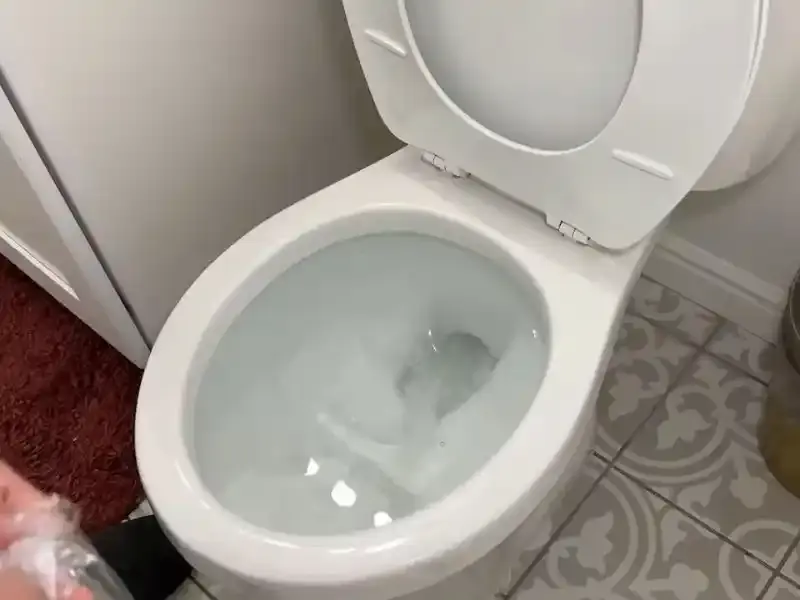
Most clogged toilets announce themselves before they fail. The flush is weaker, the bowl takes longer to empty or the water level in the bowl sits too high. Catching those signs early often means a plunger fixes it, and ignoring them means a mess on the floor.
This guide lists the signs, explains what each one means and tells you how to tell a toilet clog from a drain problem further down the line. If the toilet is overflowing now, close the shutoff behind it and call. The line is open 24/7. Our toilet repair page covers fixes.
The early signs
What you notice and what it suggests
| Sign | What it suggests | What to try. |
|---|---|---|
| Slow, weak flush | Partial clog or clogged rim jets | Plunge, clean the rim jets. |
| Bowl water rises high after a flush | Partial blockage in the trap or drain | Plunge with a flange plunger. |
| Gurgling after flushing | Air trapped behind a blockage or a vent problem | Plunge, then see if other drains gurgle. |
| Water drains very slowly | Blockage in the trap | Plunge or use a closet auger. |
| Toilet needs two flushes | A weak flush or partial clog | Check the water level in the tank and the rim jets. |
The late signs
- The bowl fills to the rim and does not drop.
- Water comes up in the tub or shower when you flush.
- Several drains gurgle or drain slowly at the same time.
- There is a sewer odor in the bathroom.
- Water backs up in a floor drain.
The last four of these point past the toilet. They suggest a blockage in the line that serves several fixtures, and plunging the toilet will not clear it.
Toilet clog or main line clog
A quick test tells you. Run water in a sink or flush a different toilet and watch the first toilet and the tub. If only one toilet is slow, the blockage is in or just past that toilet. If water rises elsewhere, the main line is partly blocked.
A main line blockage needs a different tool, a cable or a jetter, and sometimes a camera. See sewer line cleaning for how that works. Stop using water in the house while you wait.
What to do first
A short plan
The order keeps a small problem small.
- 1
Stop flushing. Another flush adds more water to a clogged bowl.
- 2
Close the shutoff. Turn the valve behind the toilet clockwise if the bowl is rising.
- 3
Plunge properly. Use a flange plunger and steady strokes.
- 4
Try an auger. A closet auger reaches deeper than a plunger.
- 5
Call if it fails. If neither works, stop and call.
Preventing the next clog
Use less paper, flush only toilet paper and waste and keep wipes in the trash. If you have children, a lid lock on the toilet prevents toys from going in. If the toilet is an older low-flow model that clogs often, replacing it with a modern high-efficiency one is a reasonable fix.
If clogs repeat, the cause may be in the line. A camera inspection shows roots, scale or a belly, see sewer camera inspection.
When the cause is not paper
Most clogs are paper and waste. Some are not. A toy, a wipe, a hair product or a feminine care item can wedge in the trap and refuse to move, and the signs look the same as a paper clog until you try to clear it.
If a plunger works for a moment and the water drops and then rises again, something solid may be sitting in the bend. Do not keep forcing it. A closet auger can hook the object, and a plumber can pull the toilet and clear it from below without damaging the porcelain.
Low flow toilets and weak flushes
An older low-flow toilet may simply not move enough water. The signs are a clog every few weeks and a flush that leaves paper behind. Cleaning the rim jets and checking the tank water level are the first fixes, and a worn flapper that closes early also shortens the flush.
If those checks do not help, the toilet itself may be the limit. A modern high-efficiency model with a wider trapway often solves a long-standing weak flush.
Records worth keeping
Note when each clog happened, what you flushed and whether other fixtures were slow. A short list helps a plumber see a pattern. Three toilet clogs in a month with slow drains elsewhere is a line problem, while one clog after a bad week of wipes is just a clog.
Douglasville: septic or sewer changes the answer
Douglas County's residential plumbing permit application lists county sewer and septic tank as separate sewer types. If your house is on septic, repeated slow flushes and backups can mean the tank needs attention, and a plunger will not help with that. Tell the plumber which you have.
If you are on county sewer, the Douglasville-Douglas County Water and Sewer Authority can tell you where its responsibility ends. This applies in Lithia Springs and the towns on our service areas page as well.
Georgia's state minimum plumbing code is the International Plumbing Code (IPC) with Georgia amendments, enforced locally. Its trap and vent rules explain why several fixtures gurgling at once points to the line and not the toilet.
Toilet backing up? Call and a licensed plumber is dispatched.
Frequently asked questions
A slow or weak flush, or a bowl that takes longer than usual to empty.
Air is being forced through water by a blockage or a vent problem. If other drains gurgle too, the main line may be partly blocked.
If water rises in a tub or shower when you flush, or several fixtures are slow, the blockage is past the toilet.
A very small clog may drain slowly overnight, but it usually returns. It is better to clear it properly.
Yes. Repeated backups may mean the tank needs service. Tell the plumber you have a septic system.
Yes. The line is open 24/7. Close the shutoff and call.
Yes. Whether it is one toilet or the main line, dispatch reaches Lithia Springs and the towns on the service areas page.